
Injection moulding scrap recycling
Injection moulding processes generate a consistent stream of cured waste, from sprues and runners to defective technical parts and start-up lumps. Unlike flexible film, this scrap is rigid, dense, and often abrasive. Plasmac provides robust shredder-extruder solutions engineered to withstand high mechanical loads, converting hard production waste into uniform granules that maintain the critical Melt Flow Index (MFI) required for your molding cycles.
Processing rigid production waste
The primary challenge in recycling injection moulding scrap is the physical hardness and density of the material. Traditional granulators generate excessive noise and dust when processing thick parts, and feeding the resulting regrind back into the injection machine can cause dosing inconsistencies.
Single-step densification
Our Omega technology eliminates the need for separate pre-shredding. The integrated slow-speed shredder is designed to ingest sprues, runners, and even heavy purgings directly. This minimizes dust generation (a critical factor for injection moulders avoiding black specks) and ensures a consistent feed to the extruder screw.
Handling technical polymers
Injection moulding often utilizes engineering plastics with specific additives. Our systems are configured to protect both the machine and the material properties.
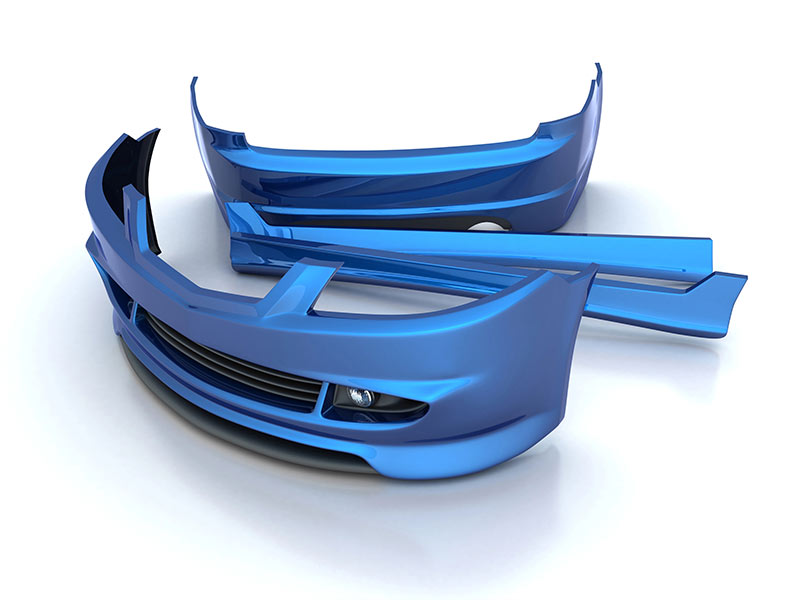
Automotive parts
Automotive components, such as bumpers and structural parts, are frequently produced using PP or ABS reinforced with glass fiber or talc. These fillers are abrasive and can cause rapid wear on standard extrusion components. Plasmac offers wear-resistant solutions and specialized metallurgy options designed specifically to process these abrasive compounds, ensuring component longevity even under heavy-duty operating conditions.
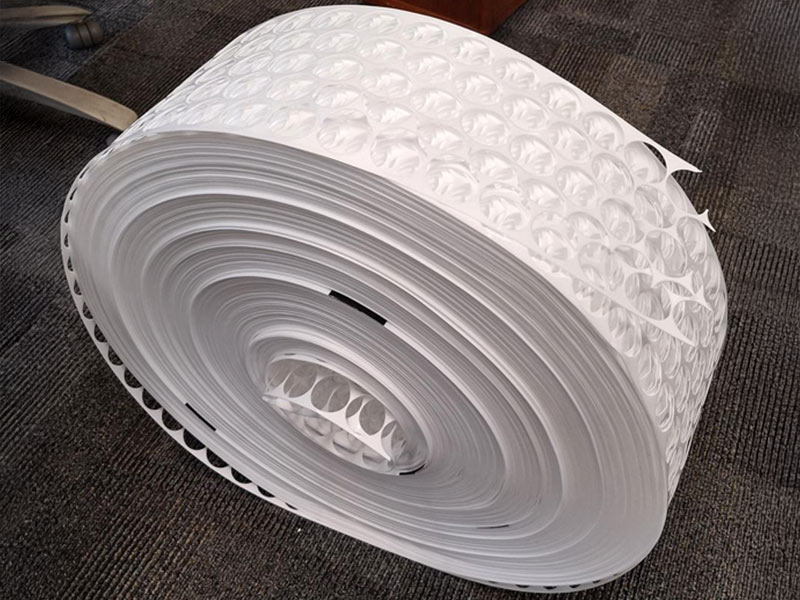
Skeletons and runners
Sprues and runner systems are virgin material that has simply undergone a thermal cycle. Recovering this material is essential for cost efficiency. Our systems process these lightweight but rigid structures efficiently, densifying them into solid pellets that can be mixed at high percentages with virgin resin without altering the injection parameters.
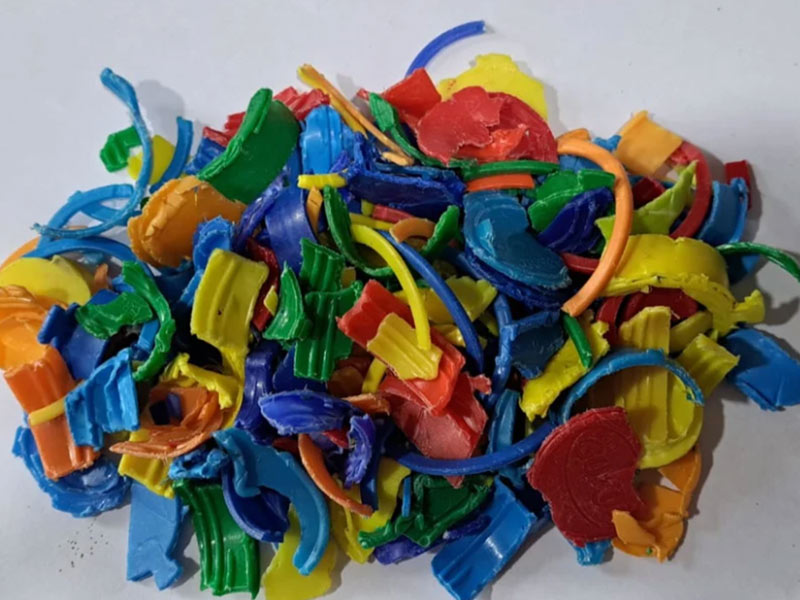
Caps and closures
High-speed cap production generates scrap in HDPE and PP. This application demands high throughput and absolute color purity. Our extrusion systems feature advanced filtration to remove any potential contamination and are designed for rapid cleaning during color changeovers, minimizing downtime in high-frequency production environments.
Preserving the Melt Flow Index
For injection moulding, viscosity stability is non-negotiable. If the recycled pellet flows differently from the virgin resin, it leads to “short shots” or flashing in the mold.
Gentle plasticization
Our Short Screw Technology (SST) ensures that the polymer is melted with minimal shear stress. This approach preserves the molecular chain length of the polymer, ensuring that the MFI of the recycled pellet remains virtually identical to the original raw material.
Metal contamination protection
Injection moulding scrap can occasionally contain metal inserts or loose screws from tooling. To protect your investment, our systems can be equipped with high-sensitivity metal detectors and magnetic separators at the feed intake, preventing catastrophic damage to the shredder or extruder screw.
Why pelletize runners?
Directly feeding regrind (ground runners) into an injection moulding machine is common but problematic.
Dosing accuracy
Regrind has an irregular shape and variable bulk density, which leads to inconsistent dosing in the injection screw’s plasticizing zone. This causes variations in the cushion and part weight. Pellets produced by Plasmac have a uniform geometry, ensuring precise dosing and repeatable cushion consistency.
Melting efficiency
Regrind melts unevenly compared to virgin pellets, potentially leading to unmelted particles in the final part. A re-pelletized granule has already been homogenized, ensuring faster and more uniform melting during the injection cycle.
Close the loop
Convert your sprues, runners, and rejects into high-quality feedstock. Contact us to discuss your specific polymer and filler requirements.